Buying Gearboxes Online
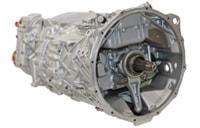
At BreakerLink we can source new, reconditioned and used gearboxes for all makes and models of cars and vans. We want to help you find the precise replacement gearbox you are looking for whether it be 5-speed or 6-speed etc, so have designed the simple request form opposite to enable you to do just that. To locate the gearbox you require we search hundreds of independent suppliers of remanufactured and reconditioned gearbox parts and dealers across the UK and Ireland, ensuring you find the part your vehicle needs, regardless of manufacturer.
The gearbox is a crucial part of the transmission process, operating in conjunction with the clutch and driveshaft to modify the output of the engine to the wheels - enabling your car to make a smooth transition from stationary to variable city driving and those more regular motorway speeds. The interdependent nature of the gearbox does mean that when it encounters performance issues other parts of your vehicle may also be impacted, such as the engine, clutch or driveshaft. To discover more about your gearbox and how it operates, take a look below. Once your part has been located, delivery can be arranged to your door, making sure you receive your gearbox swiftly and securely.
Transmission Parts Demand & Availability
Latest stats from our network of certified breakers, dismantlers and salvage yards.
- Hyundai Tucson
- Vauxhall Astra
- Ford Focus
- Volkswagen Golf
- Ford Fiesta
From £104.00 for a Honda Civic SE i-Dsi gearbox (manual) up to £4100.00 for a Ford Galaxy Titanium EcoBlue gearbox (automatic).
4,367 gearbox requests in the last 60 days.
9,624 parts quoted on.
Transmission Parts replacement
Your gearbox is essentially the largest part of a wider system in your vehicle called the transmission. In terms of what your gearbox does, it's necessary to get a little bit technical - a gearbox uses different gears to vary the power from the engine to the wheels and determine the direction in which you are travelling. When you drive, you naturally move at different speeds and levels of acceleration, setting off, navigating roundabouts and coasting down open roads; each gear operates to give you the correct level of power and torque (the force that causes rotation). The greatest torque is required when you start your vehicle, whereas a high level of power is important when you are travelling at speed - your gearbox makes both of these possible.
Manual and Automatic are the two primary types of transmission or gearbox. A manual gearbox necessitates involvement from you, the driver, to help it to operate. You are required to depress the clutch, using a foot pedal, to assist with the regulation of the energy from the engine to the wheels. A gear stick, typically with 5 or sometimes 6 different gears and reverse, enables you to select the correct amount of power and torque for your driving conditions. An automatic gearbox works within what is a 'closed system', this means it doesn't require input from you to change the gears. The gearbox changes gears as you drive by hydraulically (converting your torque) locking and unlocking a system of planetary gears.
Your manual gearbox is, by the very nature of what it does, complex - and, as a result, it has several component parts that can malfunction. Here's a breakdown of the main gearbox parts and some elements that directly connect with it:
- Mainshaft: a series of gears that are free to rotate and always turning - even when your vehicle is in neutral.
- Synchronisers: helps to keep the gears running smoothly, without grinding against each other as they make contact.
- Driveshaft: transmits torque and rotation to other components of the drive train (the parts that deliver power to the wheels).
- Gear stick: used to change gears when combined with a depress of the clutch pedal (enables a safe change whilst briefly disconnecting the engine to the drive train)
We now know that the transmission system is one of the most complex in your vehicle, relying on a multitude of parts to keep it operating as it should. Although expert mechanical advice is generally required when it comes to fixing a gearbox, it can help to have some basic knowledge of the problems that can occur:
- Fluid leak: a broken seal, too much lubricant or improper installation can all contribute to a transmission fuel leak. When the fluid levels get low, there is a resultant increase in the friction between the moving parts - over time this can lead to the failure of your gearbox. Signs of a fluid leak include:
- Resistance in the gear stick when changing between gears
- Increased noise from the gearbox
- Jarring noise when in neutral.
- Worn or damaged gears: incorrect fluid levels or worn-our or damaged gears can cause slippage. Signs of gears slipping include:
- Delayed acceleration response
- Rise in your engine's revolutions per minute (RPM)
- Unexpected change in gear whilst driving at a constant speed.
- Overheating: if there is no issue with your vehicle's radiator, this could be explained by a faulty gearbox. A drop in fluid levels can also trigger overheating within the transmission system.
At BreakerLink we want to assist you in repairing your vehicle, by finding the part you need, but we also understand that a gearbox fix can be costly and, depending on the specific element that has malfunctioned, complex. Here are a few tips to try to prevent problems from occurring:
- Check transmission fluid levels regularly: this is your vehicle's safeguard against the friction and high temperatures found within the gearbox. Be careful not to overfill though as this can also lead to transmission damage.
- Prevent excess heat: ensure your vehicle is at a normal temperature when it's running. But...
- Warm up your vehicle: in cold weather, turn on the ignition and warm up the engine before changing gears.
If your gearbox is no longer working, the easiest and most efficient solution is to replace the entire thing - due to the many composite parts within it. Sourcing a used or reconditioned gearbox is the most cost-effective way of replacing such a complex part and, at Breakerlink, we will find the right gearbox for you. Our quotes are free to receive, either online or via email or text message, just fill in your details and we will do the rest. Once you have received your replacement gearbox, you might be looking for some tips on how to change it - take a look at the BreakerLink 'Changing a Gearbox' blog for a general overview of how it should be done.