


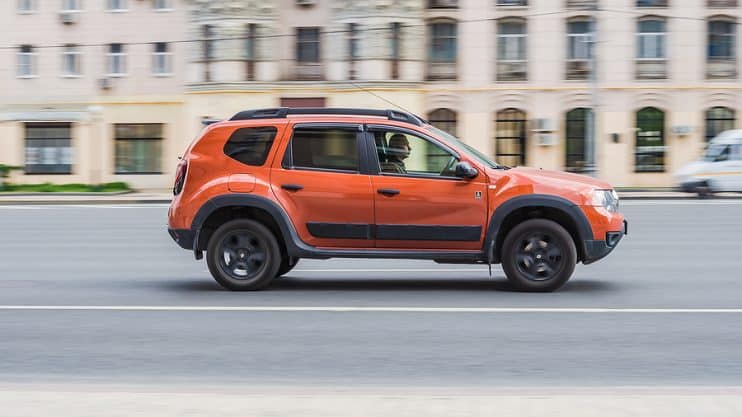
The Dacia Duster has earned a strong reputation as a no-nonsense, affordable SUV with genuine off-road ability in 4×4 form. But like any used car, it isn’t without its weak spots. Depending on the year and engine type, owners tend to report issues with the gearbox, electrical systems, emissions components like the DPF and AdBlue system, rust, and water ingress.
Our guide breaks down the most common Dacia Duster problems by area, highlights which model years are most affected, and explains what to look for when buying a used Dacia Duster. Where relevant, we also flag whether problems are usually fixable with new or used Dacia Duster parts, which can help keep repair costs down.
Table of contents:
- What to consider when buying a used Dacia Duster
- What are the common issues with the Dacia Duster?
- Is the Dacia Duster reliable?
- Are Dacia Dusters expensive to maintain?
- Best Dacia Duster models to buy (and which to avoid)
- Dacia Duster vs Nissan Juke
What to consider when buying a used Dacia Duster
Before diving into specific faults, it’s worth keeping a few points in mind that can help you avoid the most expensive surprises.
- Model year matters
Earlier cars (roughly 2010–2013) tend to suffer more from rust, tracking issues and early ECU faults, while later diesels are more prone to DPF and AdBlue problems. - Diesel vs petrol
Diesel Dusters are economical but more likely to develop diesel particulate filter (DPF) or diesel exhaust fluid (AdBlue) issues, especially if used mainly for short journeys. Petrol models are often simpler to live with. - 2WD or 4×4
4×4 models are more capable off-road but add complexity to the drivetrain. Check for noises, vibration and uneven tyre wear. - Service history
Regular servicing is key, particularly for Dacia Duster engines, gearboxes and emissions systems. A patchy history is a red flag. - Parts availability
One advantage of the Duster is the wide availability of Dacia parts, which can keep ownership costs down if issues arise.
What are the common issues with the Dacia Duster?
Engine issues
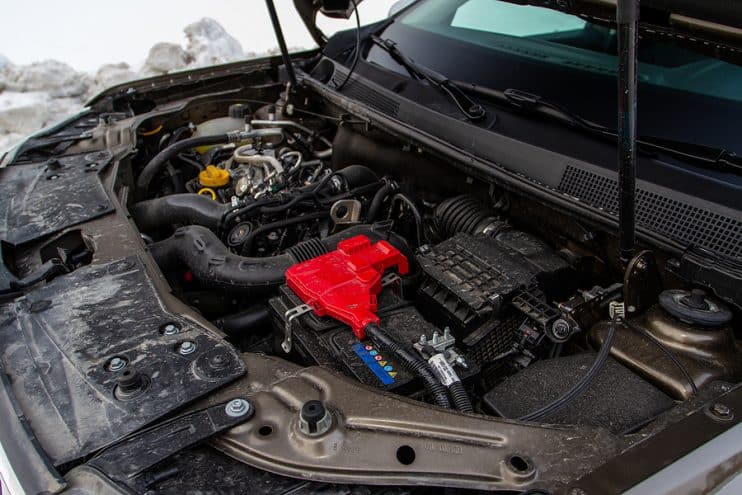
Some engine variants can suffer from hesitation, uneven acceleration or a general lack of power, particularly on older diesel models. These problems often develop gradually and aren’t always down to serious engine damage. In many cases, they’re linked to sensors, emissions-related components or software issues that affect how smoothly the engine runs.
What to look out for
- Sluggish response when pulling away
- Warning lights appearing on the dashboard
- Inconsistent power delivery
During a test drive, the engine should feel responsive and predictable. If it doesn’t, you might need further checks before buying.
Diesel particulate filter (DPF) problems
DPF problems are common on diesel Dusters that are mainly used for short trips. When the filter doesn’t get hot enough to clear itself, soot can build up over time and start causing issues. This often shows up gradually rather than all at once.
Common symptoms
- DPF or engine warning lights
- Reduced performance, sometimes with the car going into limp mode
- A noticeable drop in fuel economy
Cars that make regular longer journeys tend to suffer fewer problems, while town-only use increases the risk.
Gearbox problems
Dacia Duster gearbox problems are usually felt through changes in how the car drives rather than sudden failure. Drivers often notice stiffness or resistance when changing gear, especially when the car is cold.
Signs to check
- Notchy or stiff gear changes
- Difficulty selecting certain gears
- Clutch slip or vibration under load
These issues are often linked to wear in the clutch or linkages rather than the gearbox itself, but they’re still worth investigating before committing to buy.
Tracking and alignment
Poor tracking and alignment can make the Duster feel unsettled on the road and can quickly cause uneven tyre wear. You might spot this issue more at high speeds though, so it might not be obvious on a short test drive.
Things to watch for
- The car pulling to one side
- Uneven or rapid tyre wear
- Steering wheel not sitting straight
Correcting alignment is usually straightforward, but ignoring it can lead to further suspension and tyre issues.

Interior rattles
Interior rattles are a common complaint and often appear as the car ages. While they don’t usually point to serious faults, they can affect how solid the car feels day to day.
What owners often notice
- Rattles from door cards or dashboard trim
- Noises over bumps or rough roads
- Loose-feeling interior panels
These are usually caused by worn clips or fixings and are more irritating than expensive to fix.
Rust and corrosion
Rust is one of the more important things to check, particularly on older Dusters. It tends to develop slowly and can be easy to miss without a proper inspection underneath the car.
Areas worth checking carefully
- Sills and wheel arches
- Underbody and subframes
- Around door edges and tailgate
Surface rust can often be treated, but more advanced corrosion may require welding, which can quickly add to costs.
Water ingress
Water leaks can lead to damp interiors and electrical problems if left unresolved. These issues often come from worn door seals or poor drainage rather than major structural faults.
Signs of water ingress
- Damp carpets or boot lining
- Musty smells inside the car
- Windows misting up more than usual
Leaks are usually fixable, but it’s important to identify the source before buying.
Is the Dacia Duster reliable?
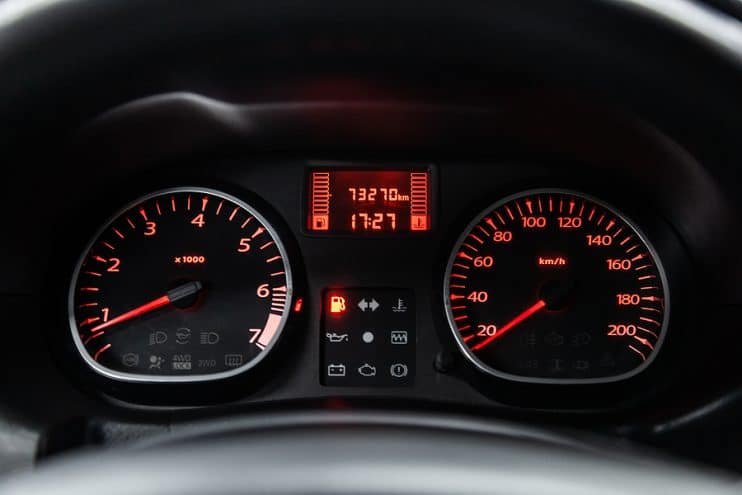
Overall, the Dacia Duster is reasonably reliable for its price point, especially if it’s been properly maintained. It may not match the luxury of more expensive rivals, but simple engineering works in its favour. Later models (post-2018) tend to be more dependable, though diesel emissions systems remain a weak spot.
Are Dacia Dusters expensive to maintain?
Running costs are generally low. Servicing is affordable, and the wide availability of parts helps keep your repair bills more manageable. Bigger costs are usually limited to replacing emissions components, gearboxes or rust repair on older cars.
Best Dacia Duster models to buy (and which to avoid)
If you’re looking for the safest all-round choice, petrol Dacia Duster models from around 2018 to 2021 strike the best balance between reliability, running costs and practicality. They have updated engineering, fewer rust concerns than earlier models, and avoid some of the emissions-related issues that affect older diesels.
Later diesel models can also be a good buy, especially if they come with a full service history and have been used regularly on longer journeys, which helps keep systems like the DPF working properly.
Earlier Dusters built between 2010 and 2013 are best approached with some caution unless there’s clear evidence of rust prevention work and correct tracking and alignment, as these areas are known weak points on early cars.
Dacia Duster vs Nissan Juke
When compared with the Nissan Juke, the Dacia Duster appeals to buyers who favour space and practicality over style.
The Duster offers noticeably more interior room and a more usable boot, making it better suited to families or anyone who needs extra carrying capacity. In 4×4 form, it also has genuine off-road ability that the Juke can’t match.
Running costs are often lower too, thanks to cheaper servicing and parts. While the Nissan Juke might feel more refined on the road and has a more polished interior, the Duster is the best choice for buyers who want more value for money and everyday usefulness.